About Tanglewood
A 1966 plan that still works
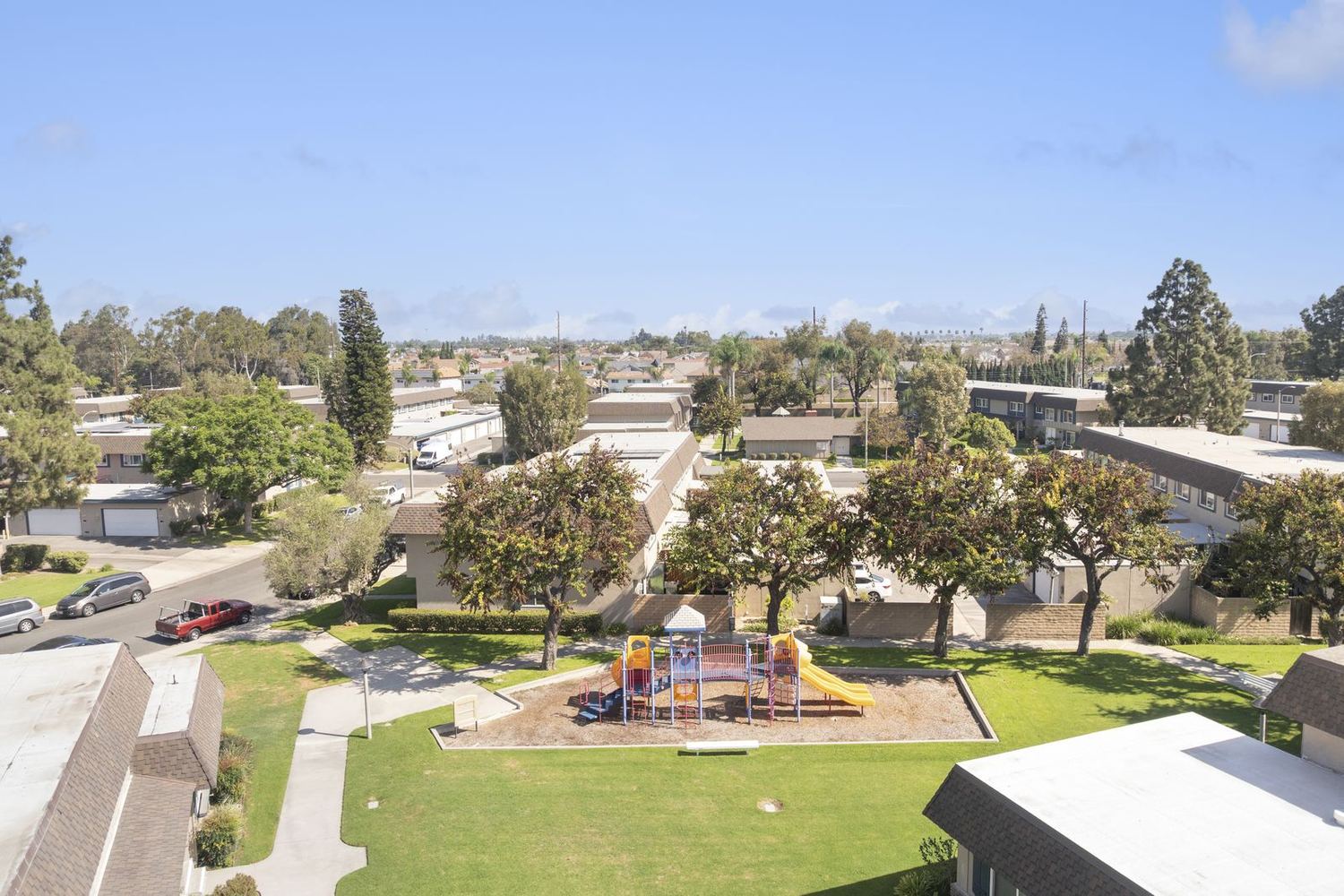
302 townhomes on roughly 35 acres in the southwest corner of Cypress — arranged so the green space runs between the homes instead of behind them.
About the community
Cypress Tanglewood was conceived and built by the Larwin Company in 1966 on approximately 35 acres — 302 townhomes, plus the pools, clubhouse and green space that came with them. Larwin Avenue, where the Clubhouse still sits, carries the builder's name.
What Larwin got right was the layout. Rather than pushing every home to the edge of its lot, the plan threaded lawn, trees and walking paths through the middle of the community and gave each home a private patio at the back. Six decades on, that decision is why Tanglewood reads as a neighborhood rather than a subdivision: the pines and queen palms are at full height, the walkways still connect, and the two pool areas still sit at the center of the summer.
How the community is organized
Legally, Cypress Tanglewood is a California nonprofit mutual benefit corporation and a planned development — not a condominium. Each owner owns their lot and their home; the Association owns and maintains the common area. The residences are townhouse-design single-family dwellings sharing party walls, each with a private patio.
The community spans three recorded tracts, all in the City of Cypress, County of Orange: Tract 6050 (lots 1–92), Tract 6051 (lots 1–88) and Tract 6052 (lots 1–122). The Association's address of record — and the Clubhouse — is 4437 Larwin Avenue.
Run by its owners
A five-member Board of owner-residents serving two-year terms sets policy, and Team Chamberlain Property Management runs the day-to-day from the office at the rear of the Clubhouse. The Board meets on the third Tuesday of every month at 7:30 p.m., in the Clubhouse, and every agenda leaves room for homeowners’ concerns.
Schools split between two districts: part of the community falls in the Cypress School District and part in the Los Alamitos Unified School District. Check your specific address with the district before enrolling.
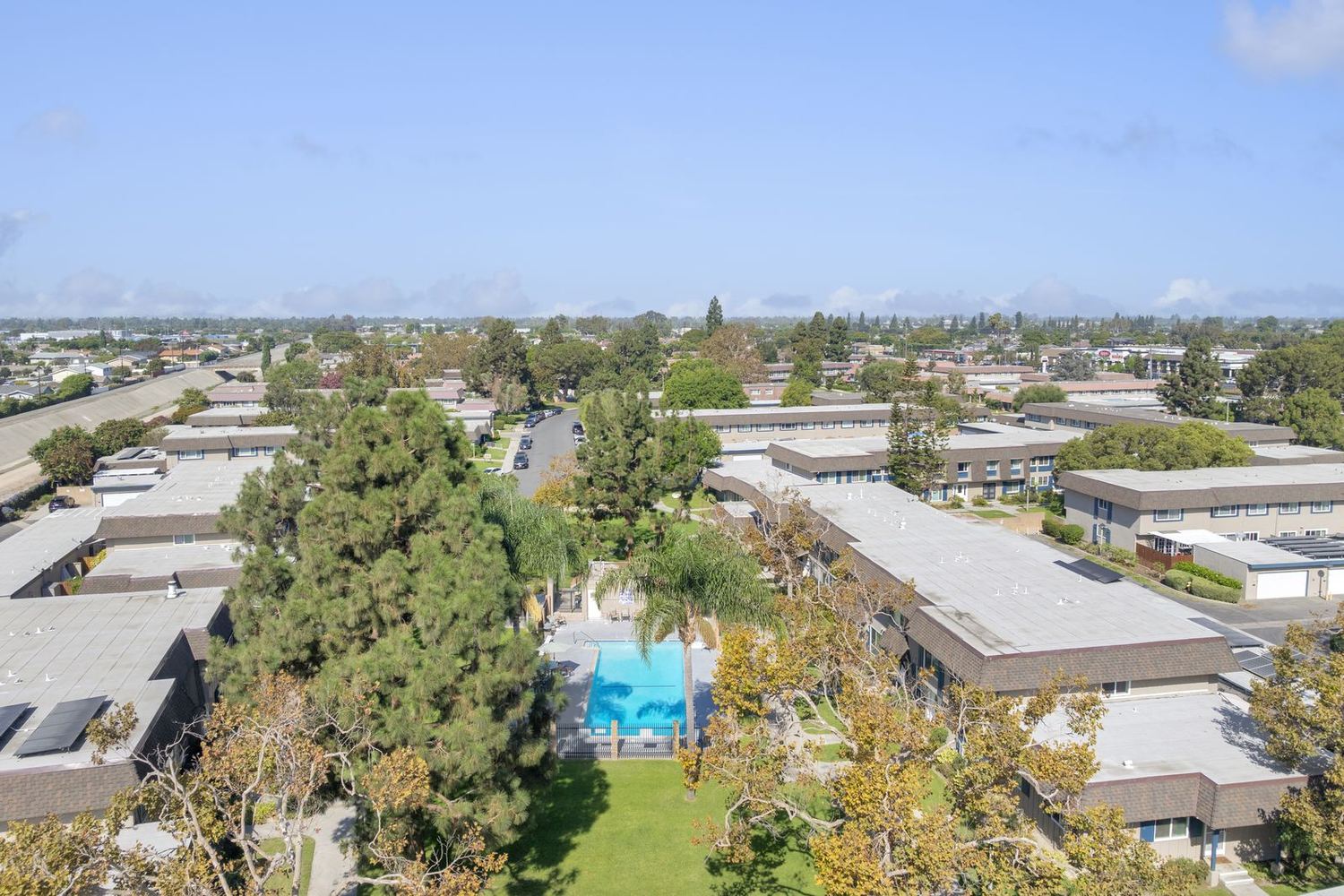
The shake mansards are original to the Larwin design and are maintained by the Association.
By the numbers
The shape of the place
Community history
How Tanglewood came together
Cypress went from dairy pasture to cul-de-sacs in about a decade, and Tanglewood was part of that turn. The city history below is public record; the Association dates come from the recorded declarations.
Dairy country
The land that becomes Cypress is worked as dairy pasture, part of the belt of dairies that supplied a growing Los Angeles basin.
Waterville, then Cypress
Artesian wells earn the area the nickname Waterville. When the Pacific Electric opens a station here, the name is already taken elsewhere on the line, so the stop is named for Cypress Elementary School instead.
"Dairy City," briefly
The community incorporates as Dairy City on July 24, 1956 — a name the dairy farmers chose partly to hold developers off. Residents vote to change it to Cypress the following year.
Tanglewood is built
The Larwin Company develops roughly 35 acres in the southwest section of Cypress. The original declaration for Tract 6050 is recorded on December 1, 1965; supplemental declarations bring in Tracts 6051 and 6052 in January and March of 1966. The Association is incorporated the same spring.
The documents are rewritten
Owners approve a First Restated Declaration of CC&Rs, replacing a set that was more than 40 years old and no longer matched California law for a planned development. The same vote adopts the rental restrictions — a 24-month owner-occupancy requirement and a 25% cap.
Sixty years in
302 homes, two pools, five playgrounds, a park, a clubhouse and about 35 acres of maturing landscape — still run by its owners, still meeting on the third Tuesday.
Thinking about Tanglewood?
The gallery is the fastest way to see the place, and the new resident guide covers everything you would need in your first week.